| GF07.61-P-3020F | ME-SFI two-sensor control function | 29.6.01 |
| |||||||||||||||||
|
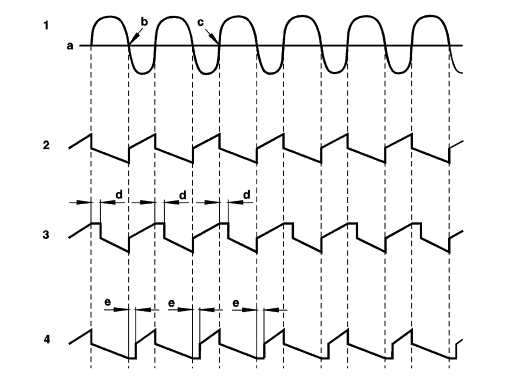
| 1 O2 sensor signal upstream of TWC
A Voltage threshold for B Rich - lean transition C Lean - rich transition 2 Lambda control without correction variable 3 Lambda control with correction variable (d), time delay (+TV) in rich direction 4 Lambda control with correction variable (e), time delay (-TV) in lean direction |
 | |
| P07.61-0383-06 |
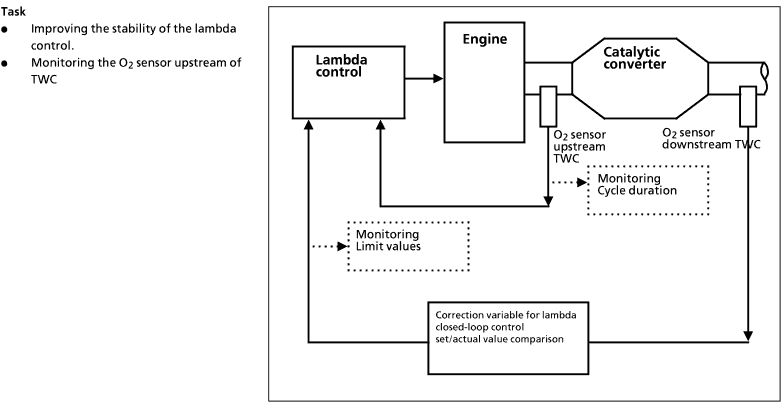
| The engine control unit calculates the lambda mean value from the signals supplied by the oxygen sensor downstream of TWC. This value is compared with a stored value for optimum exhaust emissions.
If the variation of several measurements is too large, a correction variable (lag time ± TV) is determined for the lambda control. Use of the correction factor (value for a new O2 probe about 0) allows one to compensate for aging of the O2 probe upstream of the catalytic converter within certain limits. If the correction variable exceeds the limit value, the oxygen sensor upstream of the TWC must be replaced. |
In addition, allowance is made for the period of the signal supplied by the sensor upstream of TWC. If no sensor state change takes place, the lambda control is not active and no two-sensor control is therefore possible either.

The effect of the three-way catalytic converter is monitored with the oxygen sensor signals downstream of TWC. |
| Motor electronics control unit, location/task/design/function | GF07.61-P-5000F | ||
| O2 sensors, location/task/design/function | GF07.04-P-4103F | ||
| Three-way catalytic converter location/task/design/function | GF49.10-P-3002F |